ASIA: Bangladesh – Color your Dream – An Opportunity for Marginalized Children
Art Centers for Severely Disadvantaged Children
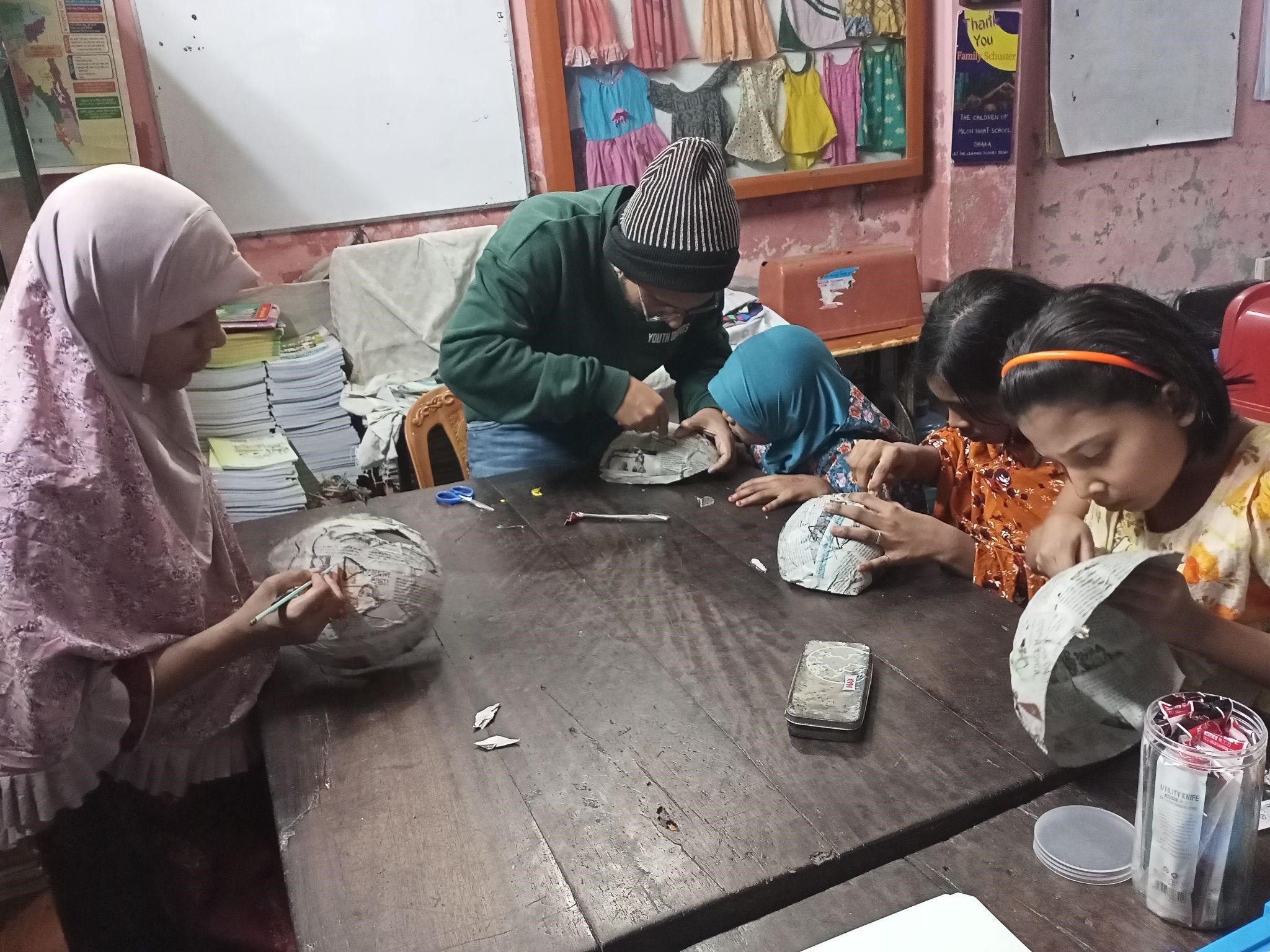
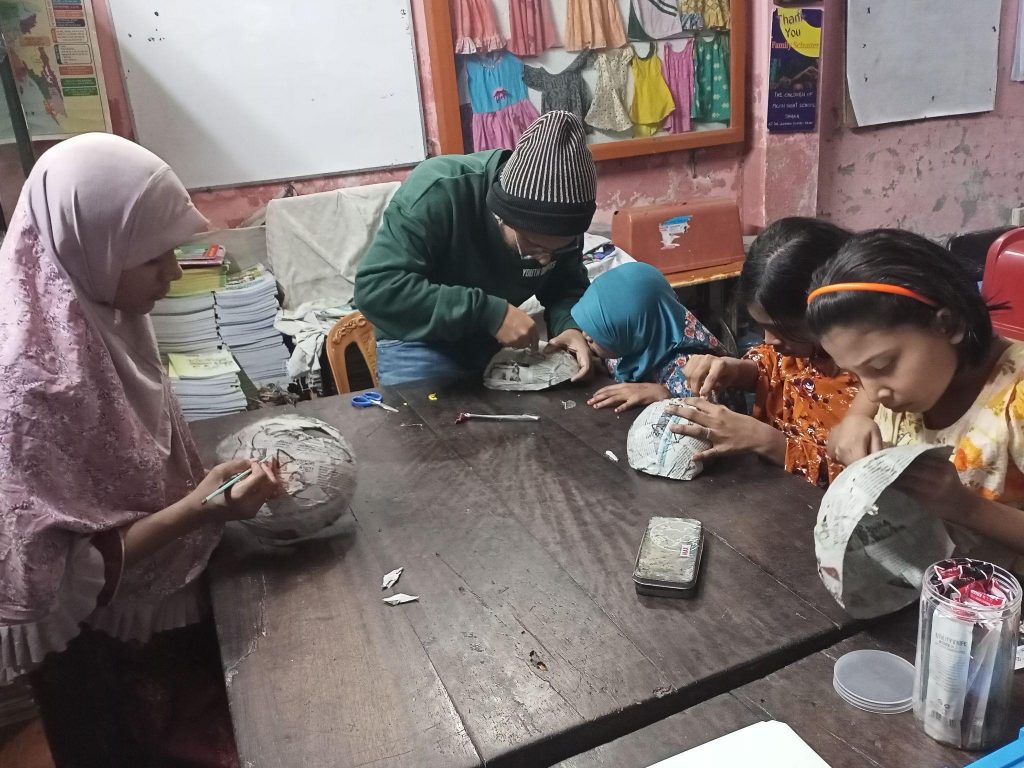
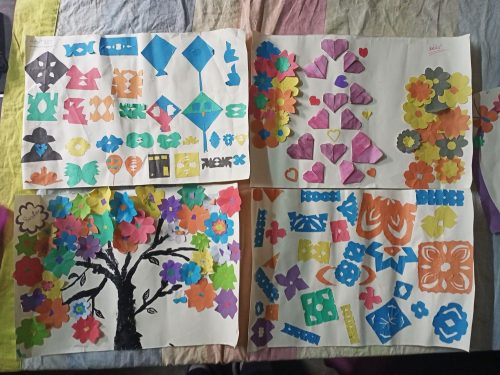
Die Kinder haben auch dreidimensionale Masken aus Pappmaché und mit Papier geklebte Bilder realisiert…
Project Status:
Finalized
Funding Topic:
Early Childhood Education and Creativity
Country / Project Location:
Dhaka
Duration:
2024 – 2025
Target Group::
Disadvantaged children between the ages of 5 and 18
Direct Beneficiaries:
200 Children (60% Girls, 40% Boys)
SDGs:
Quality Education (SDG 4)
Gender Equality (SDG 5)
Reduced Inequalities (SDG 10)
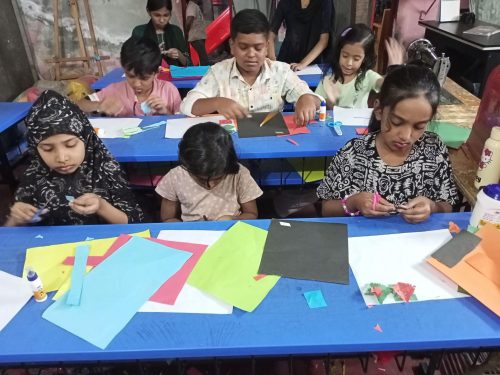
Education is crucial for breaking the cycle of poverty and for escaping child labor. To support children who do not attend school, who have had to drop out of the regular school system, and who are living in slums or working, the YOU Foundation funds the effective “night schools” model in impoverished neighborhoods in Dhaka, Bangladesh. The “Color Your DREAM” project, launched in 2024, supported 200 disadvantaged children (60% girls) in two night schools in Old Dhaka through creative and artistic educational programs. The goal was to provide safe spaces for artistic expression, offer psychosocial support, and holistic development in line with SDG 4 for severely traumatized or marginalized children.
Project Objectives:
Promoting creativity and artistic expression for children
Strengthening self-confidence and self-esteem
Providing safe, child-friendly learning spaces
Supporting psychosocial development
Offering meaningful leisure activities instead of child labor
Offering twice-weekly art classes (drawing, painting, crafts)
Providing materials, as well as papier-mâché and mask-making workshops
Offering collage and color composition exercises
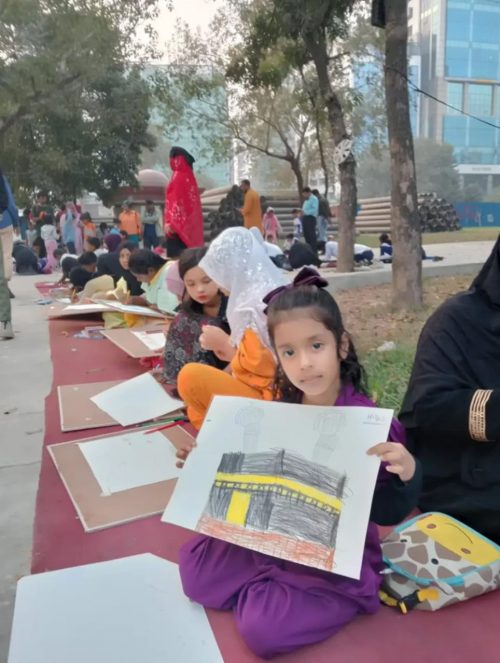
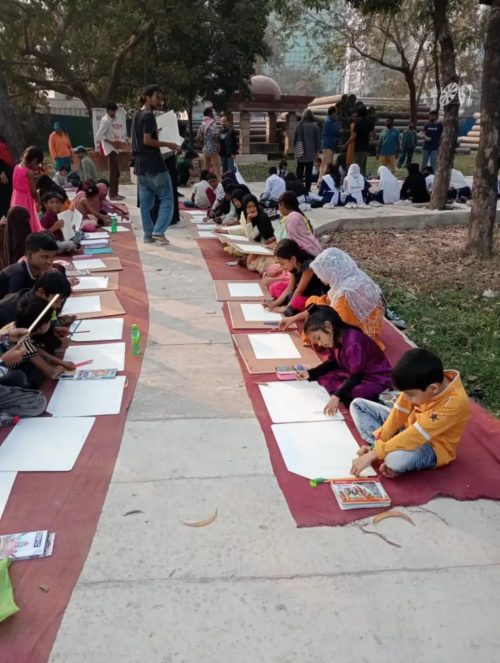
Promoting outdoor activities and painting sessions (e.g., by the river)
Hosting exhibitions and public presentations
Highlighting online exhibitions and visibility initiatives
Project Results:
Significantly improved artistic skills
Increased self-confidence and active participation
Positive emotional and social development
Creation of safe spaces for processing negative experiences
Public recognition through exhibitions
High participation of girls (60%)
Sustainability through the involvement of CBOs, volunteers, and local politicians
Rahima zeigt stolz ihr Kunstwerk!
Outdoor Mal-Aktionen
The YOU Foundation – Education for Children in Need, an initiative of UNESCO Special Envoy Dr. h.c. Ute-Henriette Ohoven, is committed to education for the poorest of the poor worldwide.